 comparison
Embroidery vs Screen Printing for Hats: Which Wins?
Table of Contents
- Embroidery vs Screen Printing for Hats: Quick Comparison
- Screen Printing on Hats: How It Works and When to Use It
- Custom Hat Embroidery: Durability and Design Limitations
- Hat Embroidery Cost vs Screen Printing: What Affects Your Price
- Best Way to Put a Logo on a Hat: Decision Framework
- Hat Construction and Why It Matters for Decoration
- Care and Long-Term Performance: Which Method Holds Up
- Conclusion: Choosing the Right Decoration Method for Your Hats
- Frequently Asked Questions
Last Updated: October 12, 2026
Embroidery vs Screen Printing for Hats: Quick Comparison
Choosing between embroidery vs screen printing hats shapes durability, appearance, cost, and how your logo looks six months from now. At American Printing Services, LLC, we help businesses nationwide with this decision, and the answer depends on your hat type, design complexity, order volume, and performance expectations.
Embroidery stitches thread directly into fabric for a raised, durable, professional look, ideal for structured hats like baseball caps and beanies, but fine details and small logos become illegible. Screen printing pushes ink through a mesh screen, capturing intricate designs and photographic detail, and is cost-effective at scale but cracks and fades with repeated washing.
The real question isn't which method is universally "better", it's which matches your specific needs.
Comparison Table: Key Differences
| Factor | Embroidery | Screen Printing | Winner Depends On |
|---|---|---|---|
| Durability | Holds up through years of wear | Fades and cracks over time | Embroidery (if durability matters) |
| Design Detail | Limited; fine lines disappear | Captures complex artwork | Screen printing (for detail) |
| Texture & Appearance | Raised, dimensional, tactile | Flat, smooth finish | Embroidery (for premium feel) |
| Best on Hats | Structured caps, beanies, visors | Flat panels, larger surfaces | Embroidery (hat shape fit) |
| Setup Cost | High upfront; lower per-unit | Moderate setup; depends on colors | Screen printing (small runs) |
| Per-Unit Cost at Scale | Stays consistent | Decreases with volume | Screen printing (large orders) |
| Color Complexity | Thread colors add minimal cost | Each color = separate screen | Embroidery (multi-color designs) |
| Minimum Order | Often 12-24 units | Often 24-50 units | Depends on vendor |
Screen Printing on Hats: How It Works and When to Use It
Screen printing forces ink through a mesh screen onto the hat surface, creating a flat, smooth finish that reproduces detailed artwork, photographs, and fine line work. Each color requires its own screen, so cost rises with design complexity.
This method shines at volume: a single-color design on 100 hats costs significantly less per unit than embroidery. On flat surfaces like the front panel of a baseball cap, it produces sharp, clean results, making it a common choice for large promotional campaigns where cost per unit decides.
However, screen printing has real limits on structured hats: ink cracks when fabric flexes, the curved crown makes even coverage difficult, and designs fade noticeably after 10-15 washes.
The Printify guide on embroidery versus screen printing notes that screen printing becomes more cost-effective as order volume grows, which aligns with what we see across our network. At smaller quantities, the setup cost per unit stays high. At 100+ units, the math shifts dramatically in screen printing's favor.
Custom Hat Embroidery: Durability and Design Limitations
Embroidery stitches thread directly into hat fabric, creating a raised, dimensional texture that feels premium and lasts for years.
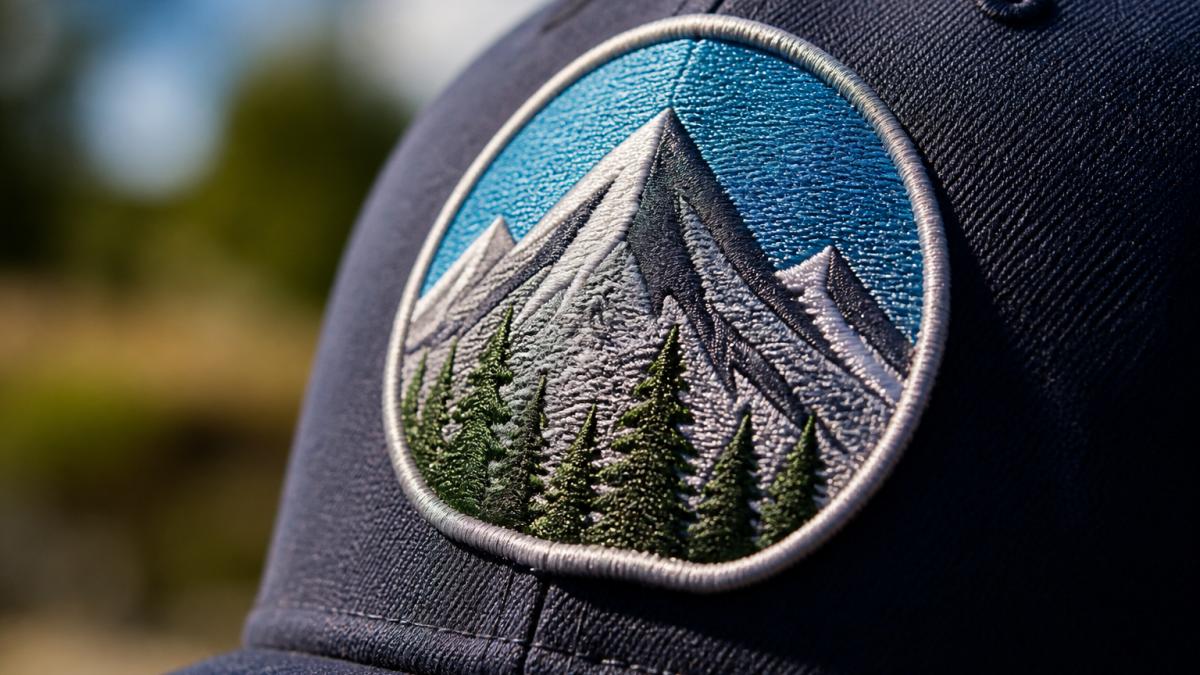
The trade-off is design complexity. Embroidery struggles with fine lines, small text, and intricate details: logos under half an inch become illegible, thin lines merge, and photographic images are impossible.
Structured hats like baseball caps are ideal for embroidery: rigid panels hold fabric taut for clean, even stitches. The curved crown works but demands more skill. Soft, unstructured hats like beanies can be embroidered, but fabric movement makes precision harder.
According to Custom Ink's hat customization guide, embroidered designs hold up through years of wear, maintaining their appearance far longer than screen-printed alternatives. This durability makes embroidery the go-to choice for branded merchandise meant to be worn repeatedly and washed regularly.
Hat Embroidery Cost vs Screen Printing: What Affects Your Price
Neither method has a fixed price; both depend on design complexity, quantity, and hat quality. Understanding the cost drivers helps you choose.
Embroidery pricing is driven by stitch count: a small logo might need 5,000 stitches, a detailed design 15,000 or more, meaning more thread and machine time. Digitizing costs $50-$150 upfront, but per-unit costs then stay flat whether you order 12 hats or 1,000, making embroidery economical for small orders if you plan to reorder.
Screen printing pricing depends on color count and quantity. A single-color design might cost $2-$5 per unit at 100 units; a four-color design $4-$8. Setup fees ($50-$200 per color) spread across the order, so at 500 units per-unit cost might drop 30-50%, while at 50 units setup makes screen printing expensive relative to embroidery.
The real cost comparison looks like this:
- Small orders (12-50 units): Embroidery usually wins. Setup costs matter less when amortized over fewer units.
- Medium orders (50-200 units): It depends. Simple designs favor embroidery; complex, multi-color designs favor screen printing.
- Large orders (200+ units): Screen printing wins. Per-unit costs drop significantly as volume increases.
American Printing Services, LLC can quote both methods for your design and quantity. Since pricing varies by hat quality, decoration location, and complexity, a formal quote is the only accurate comparison.
Best Way to Put a Logo on a Hat: Decision Framework
The right method depends on four questions, answered in order.
First: What is your order quantity?
- Under 50 units → embroidery usually costs less and looks better
- 50-150 units → request quotes for both; compare per-unit costs
- Over 150 units → screen printing likely wins on cost
Second: How complex is your design?
- Simple logo, bold text, large icon → embroidery works well
- Fine lines, small text, photographic detail → screen printing required
- Multi-color design with many colors → embroidery (fewer color limitations)
Third: Where on the hat does the logo go?
- Front panel or side → either method works
- Curved crown → embroidery is safer; screen printing risks uneven coverage
- Back or underside of visor → embroidery preferred (screen printing ink may crack)
Fourth: How long do the hats need to last?
- One-time event, worn a few times → screen printing acceptable
- Regular branded merchandise, worn repeatedly and washed often → embroidery essential
Decision Matrix:
| Scenario | Best Choice | Why |
|---|---|---|
| Small order, simple logo, durable merchandise | Embroidery | Low per-unit cost, lasts years |
| Large order, simple logo, one-time use | Screen printing | Per-unit cost drops at scale |
| Complex design, any quantity | Screen printing | Only method that captures detail |
| Multi-color logo, small order | Embroidery | Avoids per-color setup fees |
| Logo on curved crown | Embroidery | Screen printing risks cracking on flex |
| Budget-conscious, medium order | Get quotes for both | Costs may surprise you either way |
Hat Construction and Why It Matters for Decoration
Hat construction directly affects which decoration method works best.
Structured hats (baseball caps, trucker caps, snapbacks) have rigid panels reinforced with buckram or interfacing.
Unstructured hats (beanies, dad caps, soft-front caps) have no buckram, so loose fabric moves during stitching and creates uneven embroidery. Screen printing works better because ink bonds directly without relying on tension, though the flexing fabric increases crack risk over time.
Mesh panels (trucker caps, sports caps) challenge both methods: embroidery can tear through mesh, and screen printing ink may bleed through. Most vendors recommend avoiding decoration on mesh entirely or choosing a reinforced panel.
According to Dirt Cheap Headwear's guide to hat printing and embroidery, hat structure and shape make embroidery the common choice for many hat projects because the rigid panels hold the fabric steady during stitching.
The lesson: verify your hat style supports the method before choosing. A structured baseball cap works with either; an unstructured beanie or mesh trucker cap narrows your options significantly.
Care and Long-Term Performance: Which Method Holds Up
Durability separates these methods dramatically. If your hats will be worn and washed repeatedly, the choice is clear.
Embroidered hats withstand repeated washing without visible degradation.
Screen-printed hats show wear after 5-10 washes: ink cracks along flex points, colors fade gradually (especially lighter inks or sun-exposed designs), and after 20-30 washes the design is noticeably degraded. That's fine for short-term merchandise like event giveaways or seasonal promotions.
Texture matters too: embroidered logos feel raised and dimensional, which many perceive as higher quality, while screen-printed logos feel flat and smooth. For merchandise meant to impress clients or employees, embroidery signals investment; for event giveaways, screen printing is perfectly acceptable.
Care matters: cold water and air-drying extend the life of both methods, while bleach and hot water accelerate fading on screen-printed designs and high-heat machine drying damages both. If your team will wash hats carelessly, embroidery is the safer bet.
Conclusion: Choosing the Right Decoration Method for Your Hats
The choice in embroidery vs screen printing hats isn't about a universal winner, it's about matching the method to your situation. Embroidery delivers durability, premium appearance, and consistent costs across order sizes; screen printing captures complex designs and gets dramatically cheaper at volume.
American Printing Services, LLC works with businesses nationwide to execute both methods flawlessly. Our network of production facilities ensures fast turnaround, consistent quality, and competitive pricing whether you're ordering 24 embroidered caps for your leadership team or 500 screen-printed hats for a national trade show.
Answer four questions, order quantity, design complexity, logo placement, and needed lifespan, and they'll point you to the right method. Request quotes for both; costs often surprise people, and American Printing Services, LLC can help you compare fairly.
Get started with American Printing Services, LLC and ensure your branded hats reflect your company's professionalism and attention to detail. Visit our website to request a quote or discuss your specific needs with our team.
Frequently Asked Questions
Is embroidery or screen printing better for hats?
Neither is universally better, it depends on your design and priorities. Embroidery creates a raised, textured, professional look that's highly durable on structured hats like baseball caps and polo-style headwear. Screen printing offers better color reproduction and detail for complex artwork or photographic designs, and costs less per unit at high volumes. For most business logos and team branding, embroidery wins on durability and appearance; for detailed, multi-color designs, screen printing often works better.
What affects hat embroidery cost compared to screen printing?
Hat embroidery cost depends on stitch count, design complexity, and hat type. Simple logos cost less than detailed artwork. Screen printing has high setup costs but lower per-unit cost at volume, making it cheaper for large orders. Embroidery has minimal setup cost but higher per-unit labor, so it's more economical for small runs. Hat structure also affects price: curved surfaces and panel shapes make embroidery more labor-intensive than printing on flat fabric.
Can you screen print on all types of hats?
Screen printing works best on flat or slightly curved surfaces, making it ideal for the crown or bill of structured hats. Highly curved or unstructured hats are difficult to print because the fabric doesn't sit flat on the press. Embroidery is more versatile for complex hat shapes because the needle can follow curves. If your hat design needs to wrap around a crown or fit an irregular panel, embroidery is usually the better choice.
Which decoration method lasts longer on hats?
Embroidery typically outlasts screen printing on hats. Stitched thread bonds directly to the fabric and resists cracking, fading, and peeling through years of wear and washing. Screen-printed ink can fade, crack, or peel if the hat is washed frequently or exposed to UV light. For team apparel or branded merchandise worn regularly, embroidery offers superior longevity. Screen printing may show wear after 20-30 washes; embroidery can last the life of the hat.
What's the best way to put a logo on a hat for a business?
For business branding, embroidery is usually the best choice because it looks professional, lasts longer, and works on structured hats like baseball caps and polo styles. If your logo is simple and solid colors, embroidery delivers a polished appearance. If your design has fine detail, gradients, or photographic elements, screen printing may be necessary. Consider your order volume: embroidery works for small to medium runs; screen printing becomes cost-effective at higher volumes.