 ultimate-guide
Branded Apparel for Men and Women Teams: Ultimate Guide
Table of Contents
- What Branded Apparel Does for Team Identity
- Embroidery vs Screen Printing for Apparel
- Best Fabrics for Team Sports Apparel
- Branded Apparel Design Best Practices
- Fit and Sizing Options Across Men's and Women's Lines
- Bulk Ordering and Pricing Strategy
- Sustainability and Ethical Sourcing in Team Apparel
- Turnaround Time and Delivery Guarantees
- Frequently Asked Questions
Last Updated: September 27, 2026
What Branded Apparel Does for Team Identity
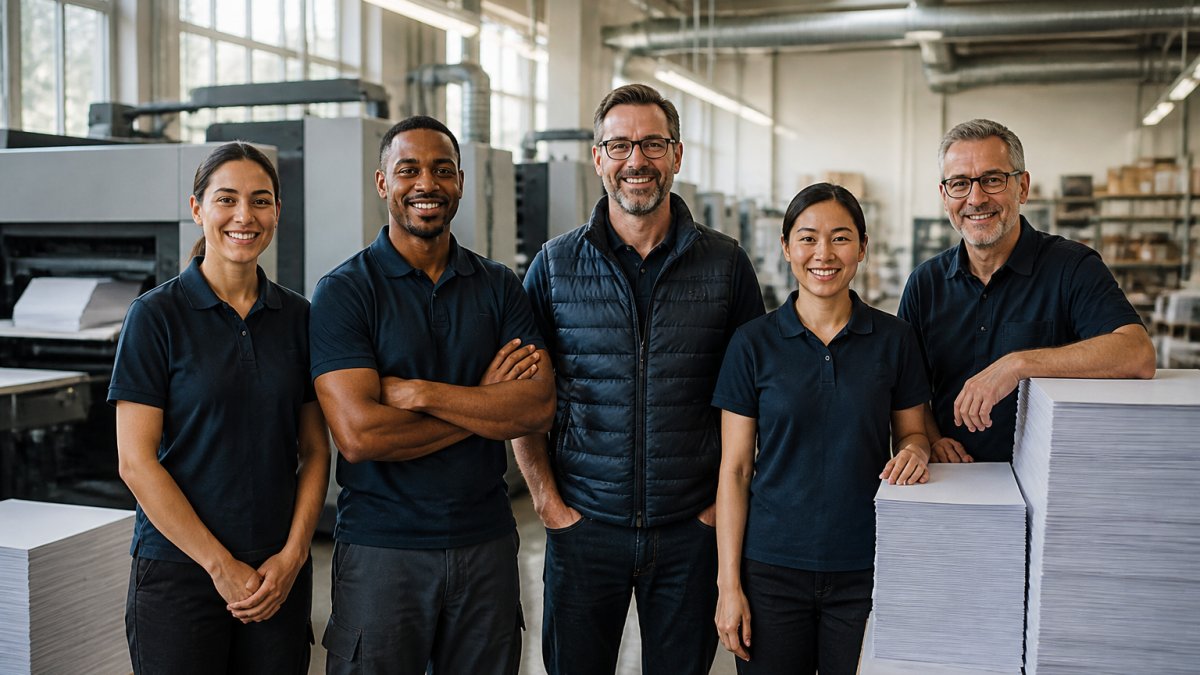
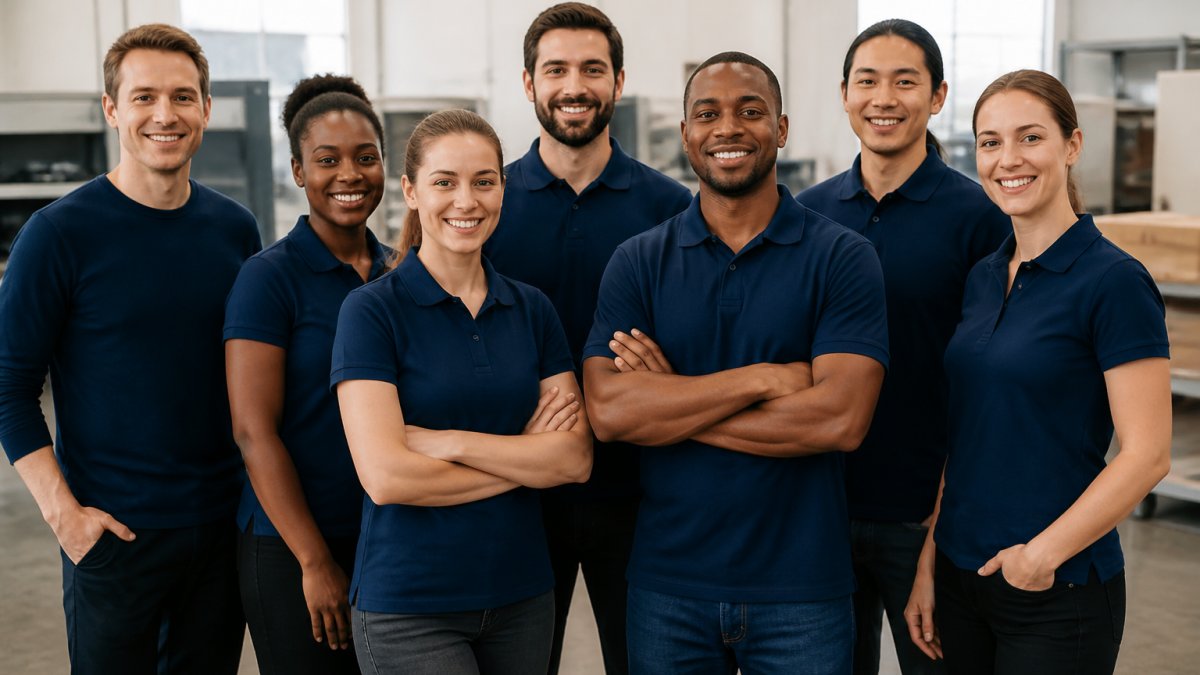
Branded apparel for men and women teams isn't just about matching outfits. It's a strategic tool that transforms how teams communicate internally and how they're perceived externally. When your workforce wears consistent, professionally designed branded apparel, you're creating a visible identity that builds trust, reinforces company values, and strengthens team cohesion.
The psychological impact runs deeper than aesthetics. Teams wearing coordinated branded apparel report stronger feelings of belonging and shared purpose. For customer-facing roles, branded apparel signals professionalism and authority. For internal teams, it eliminates visual hierarchy and creates equality. This is why retail chains, event teams, and corporate groups invest in cohesive apparel strategies.
At American Printing Services, LLC, we've worked with organizations across industries that recognize branded apparel as a non-negotiable investment in team culture and brand consistency. The challenge most teams face isn't deciding whether to invest, it's executing the strategy correctly.
Embroidery vs Screen Printing for Apparel
Choosing between embroidery and screen printing shapes how your branded apparel looks, feels, and performs. Each method has distinct advantages depending on your design complexity, quantity, fabric type, and durability requirements.
Embroidery creates a three-dimensional, textured design by stitching thread directly into the garment. It's ideal for logos, smaller designs, and situations where durability is paramount. Embroidered apparel withstands hundreds of washes without fading or cracking. The tactile quality conveys premium positioning, embroidered polo shirts and jackets communicate higher-end branding than printed alternatives.
However, embroidery has limitations. Complex multi-color designs with fine details become difficult and expensive to execute. Digitization, converting your artwork into stitch patterns, requires precision to maintain quality.
Screen printing applies ink directly to fabric through mesh screens, one color at a time. It excels at bold, graphic designs with solid color blocks and handles large print areas efficiently. Screen printing works on virtually any fabric and creates a smooth, flat finish. For high-volume orders, screen printing typically costs less per unit than embroidery.
The trade-off: fine details and gradients are challenging to reproduce accurately. Screen printing also requires separate screens for each color, making complex designs expensive to set up.
ASTM International standards for textile durability testing
Best Fabrics for Team Sports Apparel
Performance Fabrics and Moisture-Wicking Technology
The fabric you choose determines whether your branded apparel feels like a premium investment or a cheap giveaway. Performance fabrics, engineered blends designed to manage moisture, regulate temperature, and maintain shape, have become standard for active team environments.
Moisture-wicking technology pulls sweat away from skin to the fabric's outer surface, where it evaporates quickly. This keeps wearers dry and comfortable during physical activity. Look for fabrics labeled with specific moisture-wicking capabilities: nylon blends, polyester microfiber, and specialized synthetics all perform well.
For teams working in high-temperature environments or engaging in physical activity, moisture-wicking is highly beneficial. A common mistake is selecting cotton-dominant blends for "breathability." Cotton absorbs moisture rather than wicking it, leaving wearers feeling damp and uncomfortable.
Polyester Blends for Durability and Color Retention
Polyester blends dominate professional branded apparel because they deliver durability, color consistency, and easy care. A 65/35 polyester-cotton blend balances comfort with performance: polyester provides strength and color retention while cotton adds breathability and a softer feel against skin.
Pure polyester apparel resists fading, shrinking, and pilling. Polyester also accepts dyes more efficiently than natural fibers, which means more vibrant, consistent colors across batches. For organizations requiring strict color matching and Pantone consistency across multiple orders, polyester blends are a reliable choice.
The durability advantage extends to garment decoration. Whether you're using embroidery or screen printing, polyester blends can hold stitching and ink securely. Embroidered designs can be more secure, and screen-printed graphics can resist cracking longer.
Branded Apparel Design Best Practices
Logo Placement and Vector Artwork Standards
Where you place your logo on branded apparel determines visibility, professionalism, and longevity. The most common placement, left chest for shirts and jackets, balances visibility with practicality. A logo at chest height catches the eye during face-to-face interactions without dominating the garment.
Color Matching and Pantone Consistency
Color consistency across orders separates professional branded apparel from amateur efforts. Pantone color matching provides a standardized language: when you specify "Pantone 286 C" (a specific blue), manufacturers across different facilities understand exactly which blue you want.
Pantone Color Matching System technical standards
Fit and Sizing Options Across Men's and Women's Lines
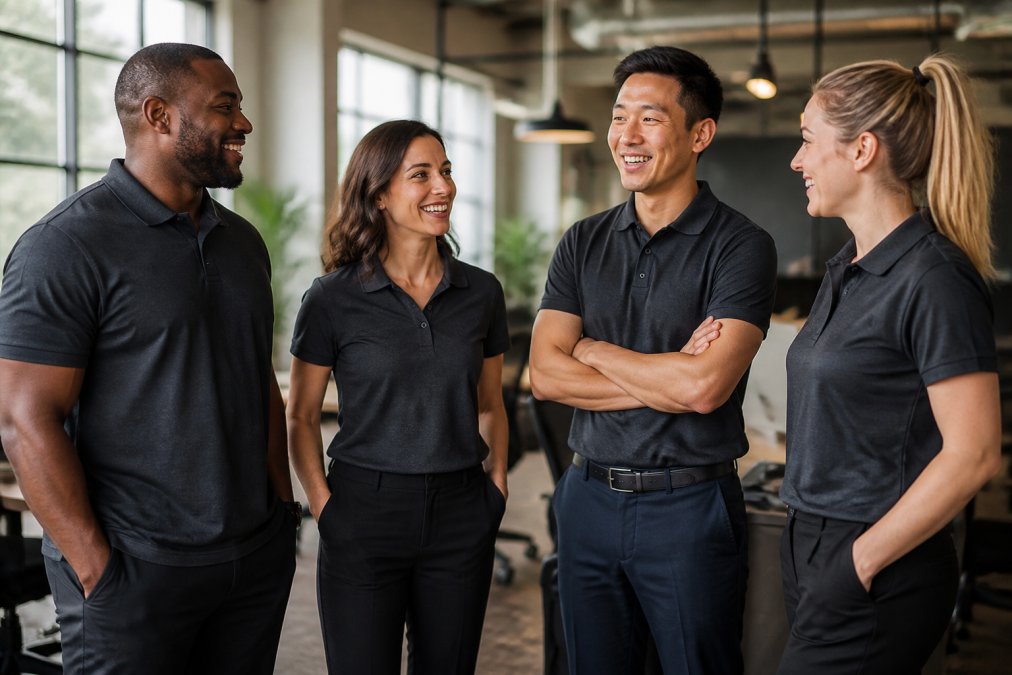
Offering both men's and women's fit options signals that your organization values inclusion and comfort for all team members. Men's and women's apparel have different construction: women's cuts typically feature narrower shoulders, tapered waists, and shorter torso lengths, while men's cuts are straighter through the body with longer lengths.
Bulk Ordering and Pricing Strategy
Bulk ordering for branded apparel involves more variables than most teams realize. Minimum order quantities vary by supplier, garment type, and decoration method. Embroidered items typically require higher minimums than screen-printed apparel because setup costs are front-loaded.
Sustainability and Ethical Sourcing in Team Apparel
Sustainability in branded apparel manufacturing addresses two concerns: environmental impact and labor practices. Many organizations now require vendors to demonstrate ethical sourcing.
Turnaround Time and Delivery Guarantees
Turnaround time, the period from order placement to delivery, varies based on production complexity, current facility capacity, and shipping distance. Standard turnaround typically ranges from 2-4 weeks for most branded apparel. Rush orders are possible but cost significantly more.
| Consideration | Impact | Priority |
|---|---|---|
| Fabric choice (polyester vs. cotton blends) | Durability, color retention, comfort | High |
| Embroidery vs. screen printing | Design complexity, cost, longevity | High |
| Men's and women's fit options | Team satisfaction, inclusion, brand representation | High |
| Color matching and Pantone standards | Brand consistency across orders | Critical |
| Bulk ordering strategy | Cost efficiency, delivery coordination | Medium |
| Sustainability certifications | Corporate values alignment, employee engagement | Medium |
Frequently Asked Questions
What are the benefits of branded apparel for teams?
Branded apparel strengthens team spirit and corporate identity by creating a unified professional appearance across all members. It improves employee engagement, reinforces brand consistency at events and in the workplace, and enhances recognition at trade shows or customer interactions. Custom team apparel also serves as a cost-effective marketing tool that turns employees into brand ambassadors while building internal cohesion and morale.
What is the difference between screen printing and embroidery for team gear?
Screen printing applies ink directly onto fabric, offering vibrant colors, detailed designs, and cost efficiency for large quantities. Embroidery stitches thread into the fabric, creating a textured, premium appearance that's highly durable for workwear and formal uniforms. Screen printing can be effective for logos with fine detail; embroidery can suit solid designs and corporate uniforms. Embroidery can cost more per unit but may offer a longer-lasting, premium appearance.
How do I choose the right fabric for custom team apparel?
Select based on use case: performance fabrics with moisture-wicking technology suit active teams and sports environments, while polyester blends offer durability and color retention for everyday business casual wear. Cotton blends can offer comfort and breathability for indoor office settings. For outdoor or high-activity roles, fabrics with stretch and quick-dry properties can be beneficial.
How can I ensure consistent branding across men's and women's apparel?
Work with a vendor that uses vector artwork and Pantone color matching to maintain consistency across all garment cuts. Specify exact logo placement, sizing, and color codes in your design guidelines. Request color-matched samples across men's and women's fits before full production. Using a single vendor with multiple production facilities can help standardize processes.
What are the best practices for ordering custom team uniforms in bulk?
Start with a detailed design and proofing process, submit vector artwork, confirm Pantone colors, and review samples before committing to minimum order quantities. Consolidate orders across locations to potentially reduce per-unit costs. Allow adequate turnaround time, especially during peak seasons. Work with a vendor that manages apparel sourcing, handles multiple locations, and provides secure, timely delivery across your entire organization.
How do I know a vendor can handle rush orders for multiple locations?
Choose a partner with a network of production facilities that can distribute workload during peak demand. Ask about their turnaround time guarantees and request references from clients with multi-location operations. Confirm they can manage simultaneous orders across different sites without delays. A vendor with experience handling nationwide delivery and a proven track record of meeting deadlines during high-volume seasons can be beneficial for reliable service across all your locations.
What's the typical minimum order quantity for branded apparel?
Minimum order quantities vary by decoration method and fabric type, but typically range from 24 to 100 units per design. Consolidating orders across multiple locations can help you meet minimums while potentially reducing per-unit costs. Discuss your volume and timeline with your vendor to find options that fit your budget and operational needs without sacrificing quality or delivery speed.
How do I prevent color matching issues across multiple orders?
Specify exact Pantone colors in your design files and request color-matched samples before production begins. Using a single vendor with consistent production processes can help minimize batch-to-batch variations.