 listicle
Best Commercial Printing Alternatives 2026
Table of Contents
- Quick Comparison: Top Commercial Printing Alternatives for 2026
- Print on Demand vs Commercial Printing: Which Model Fits Your Volume?
- Commercial Printing Industry Trends 2026: What Operations Managers Need to Know
- How to Choose a Commercial Printing Partner: A Decision Framework
- 1. American Printing Services, LLC: Best for Enterprise-Scale Consolidation
- 2. Vistaprint: Best for Small Businesses Needing Templates and Signage
- 3. Printful: Best for E-Commerce Brands Automating Fulfillment
- 4. Printify: Best for Merchants Testing Multiple Product Lines
- Frequently Asked Questions
Last Updated: September 23, 2026
Quick Comparison: Top Commercial Printing Alternatives for 2026
The best commercial printing alternatives in 2026 split into two camps: production networks that consolidate your entire print spend, and self-serve platforms built for single projects. For operations managers running multi-location branding, the deciding factor is rarely price per unit. It's whether one vendor can absorb your peak-season volume without missing a deadline.

| Provider | Model | Best For | Standout Strength |
|---|---|---|---|
| American Printing Services, LLC | Managed production network | Enterprise consolidation | 2,500+ facilities, nationwide delivery |
| Vistaprint | Self-serve online printing | Small business templates | Design library, signage range |
| Printful | Print-on-demand fulfillment | E-commerce automation | Platform integrations, in-house QC |
| Printify | POD provider network | Testing product lines | Provider competition, API access |
Print on Demand vs Commercial Printing: Which Model Fits Your Volume?
Print on demand vs commercial printing comes down to one question: do you order after the sale, or before it? Print-on-demand produces each item when a customer buys, which eliminates inventory risk but raises unit cost. Traditional offset and digital printing rewards bulk ordering with a lower unit cost, but you commit to volume upfront. That much is standard. What most comparisons skip is the cost mechanics underneath the choice, and the fact that the right answer is usually a hybrid, not a side.
The cost mechanics that actually decide it
Four cost lines move in opposite directions between the two models:
- Setup and plate cost. Offset printing carries a fixed setup cost per job (plates, make-ready, press calibration). That cost is spread across the run, so it dominates at low volume and nearly disappears at high volume. Digital presses cut setup to near zero, which is why short runs favor digital over offset.
- Unit cost curve. On-demand pricing is roughly flat per unit regardless of quantity. Bulk pricing steps down at quantity breaks. The two curves cross at a volume threshold that depends on the specific product, substrate, and finishing.
- Inventory carrying cost. Bulk ordering shifts cost from per-unit price to warehousing, insurance, shrink, and obsolescence. A common pattern is that 15-25% of a bulk print run is never used because the campaign, SKU, or design changed before the stock ran out.
- Rework and returns cost. On-demand absorbs design changes for free (nothing is printed until ordered). Bulk runs lock in a design; a late change means reprinting the entire run.
The crossover, in practice
The crossover point is not a single number, it is the quantity at which bulk unit savings exceed the carrying and obsolescence cost of the inventory you are holding. A practical way to find it:
- Get a per-unit quote at three quantities from a bulk printer (for example, 500, 2,500, and 10,000 units).
- Get the on-demand per-unit price for the same item.
- Estimate how many units you will actually sell or distribute before the design or SKU changes.
- Multiply the bulk unit savings by that realistic sell-through number, then subtract warehousing and the expected write-off on unsold stock.
Why the hybrid model usually wins
Most operations that scale past a few hundred orders a month end up running both. The common pattern:
- On-demand for new product launches, long-tail SKUs, made-to-order items, and anything with unpredictable demand.
- Bulk commercial printing for proven sellers, recurring collateral (forms, labels, packaging inserts), and any item with a stable, forecastable reorder rate.
- A single vendor relationship that can serve both, so you are not managing two procurement workflows, two invoicing cycles, and two quality standards.
Commercial Printing Industry Trends 2026: What Operations Managers Need to Know
Three shifts define commercial printing industry trends in 2026. First, procurement teams are consolidating vendors to reduce administrative overhead and enforce brand consistency. Second, e-commerce integration is now table stakes, with web-to-print storefronts replacing email-and-PDF order flows. Third, buyers are demanding supply chain transparency, including where materials are sourced and how production capacity is distributed.
How to Choose a Commercial Printing Partner: A Decision Framework
Choosing a commercial printing partner starts with mapping your real requirements, not the vendor's feature list. Most buyers evaluate on unit cost and stop there. The framework below scores candidates on the criteria that actually break an operation, and adds two tools competitors skip: a total cost of ownership (TCO) breakdown and a standardized sample-testing benchmark.
Step 1: Score the five core criteria
Weight each criterion by what happens to your operation when it fails, then score every candidate on the same scale.
- Production capacity. Can they absorb your peak volume across every location simultaneously, or do they throttle during your busiest weeks? Ask for their peak-season capacity headroom, not their average.
- Turnaround time. What is the guaranteed window, and what is the remedy when they miss it? A vendor with a written service-level commitment and a reprint credit is worth more than one that is simply "fast."
- Quality control. Do they offer sample testing, batch-to-batch color consistency, and a documented color standard (for example, a Pantone or G7 target)? See the benchmark below.
- Integration. Does the platform connect to your e-commerce stack, procurement system, or ERP via API, or does it require manual order entry?
- Total cost of ownership. Factor in shipping, packaging, reprints, and administrative time, not just unit cost. See the TCO breakdown below.
Step 2: Run a total cost of ownership breakdown
Unit price is the smallest part of what you actually pay. Build a TCO line for each candidate that includes:
- Unit cost at your realistic order quantity (not the headline quantity-break price).
- Setup and plate fees per job, amortized across the run.
- Shipping and freight, including expedited surcharges when a deadline slips.
- Packaging and kitting, if items ship individually or as sets.
- Reprint and spoilage allowance, a realistic percentage of every run that fails QC or arrives damaged.
- Returns and reship cost for customer-facing orders.
- Administrative time, hours your team spends on order entry, proofing, and vendor follow-up, valued at a loaded hourly rate.
Step 3: Benchmark quality with a standardized sample test
Before you commit volume, order the same sample job from every finalist and score it identically. A repeatable framework:
- Color accuracy. Compare the sample against your supplied color target under consistent lighting. Note drift, not just pass/fail.
- Registration and alignment. Check that multi-color elements and die-cut lines land where they should, across the full sheet, not just the center.
- Substrate and finish. Confirm the stock weight, coating, and finish match the spec, substitutions are common and often undisclosed.
- Consistency across the run. Order a small batch and compare the first, middle, and last pieces. Batch-to-batch drift is the failure mode that unit-cost comparisons never catch.
- Packaging and transit condition. How did the sample arrive? Transit damage predicts what your full run will look like on arrival.
1. American Printing Services, LLC: Best for Enterprise-Scale Consolidation
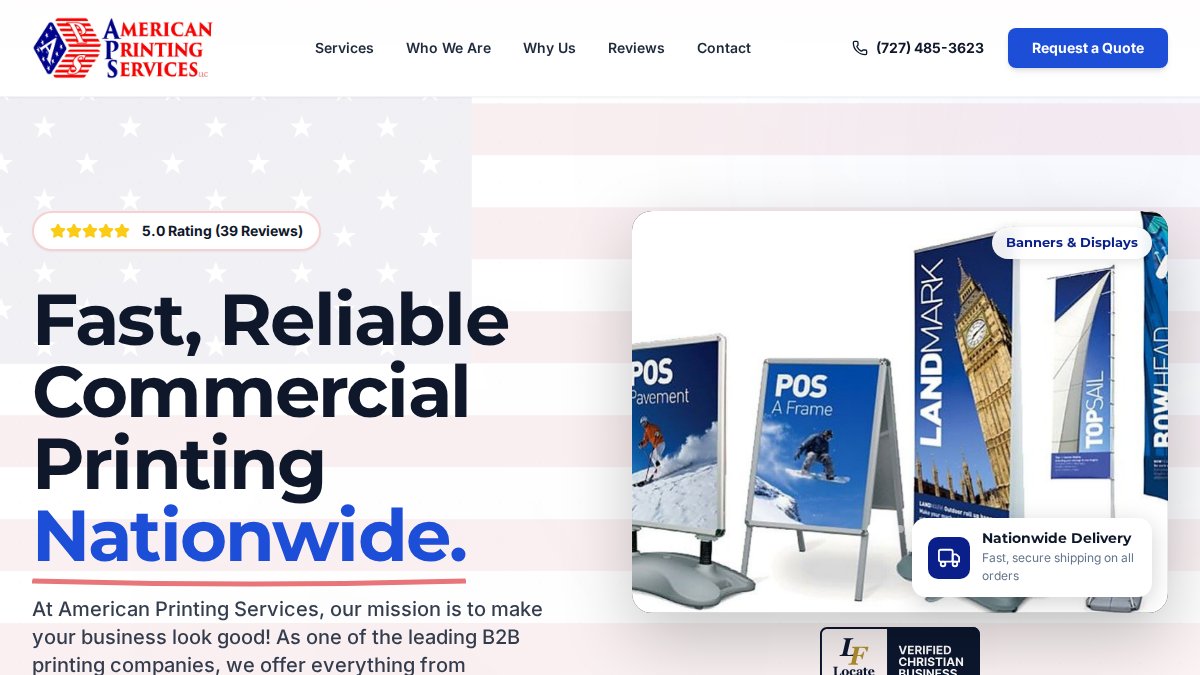
American Printing Services, LLC is the strongest fit for multi-location enterprises that need one vendor instead of five. The company operates a network of production facilities across North America, which means production capacity is distributed rather than concentrated in a single plant. That matters when a regional promotion needs to hit twenty stores in the same week.
2. Vistaprint: Best for Small Businesses Needing Templates and Signage
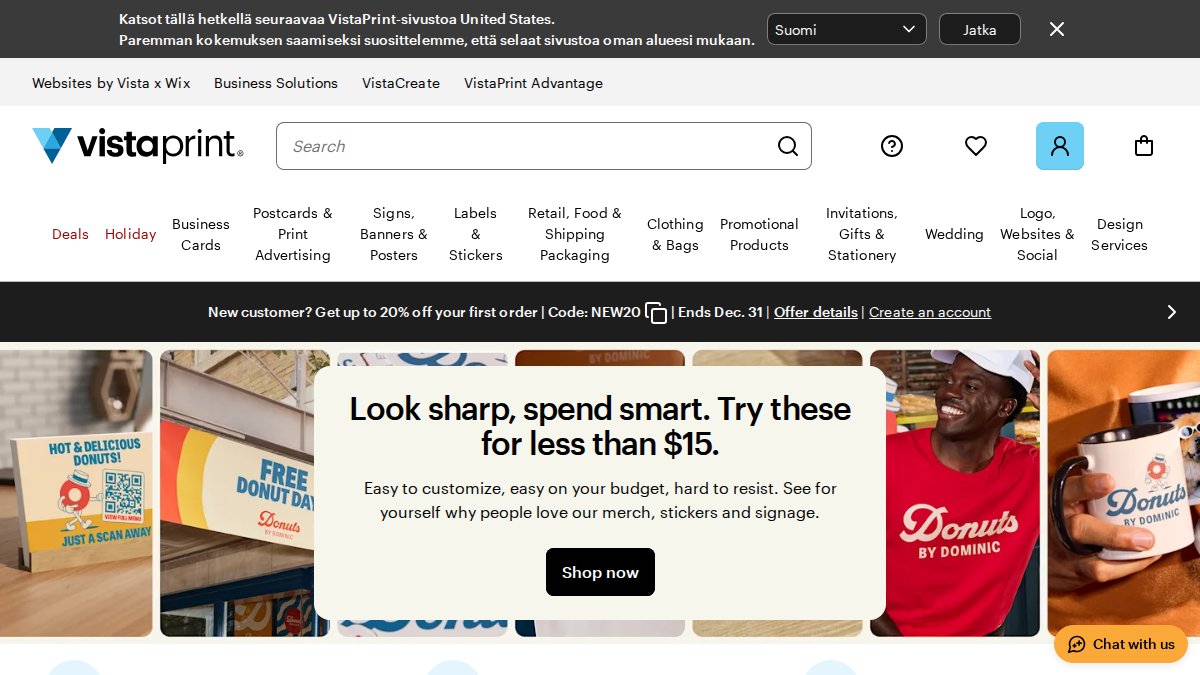
Vistaprint works well when you need marketing materials fast and don't have a design team. The platform offers an extensive library of customizable templates, bulk ordering for collateral, and direct mail and signage production. Its ProAdvantage program bundles business-focused benefits for repeat buyers.
3. Printful: Best for E-Commerce Brands Automating Fulfillment
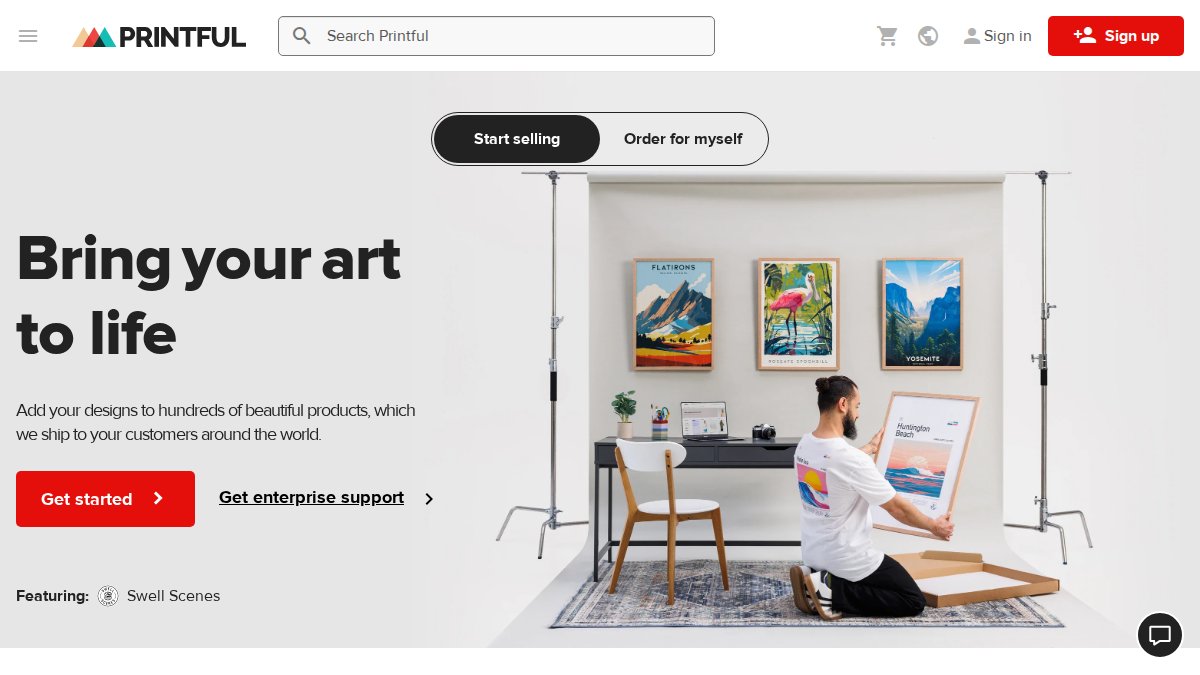
Printful is built for e-commerce brands that want fulfillment handled without touching inventory. It integrates directly with Shopify, Etsy, and WooCommerce, routes orders automatically, and produces in-house for tighter quality control. Custom branding on packaging lets you present a white-label experience to customers.
4. Printify: Best for Merchants Testing Multiple Product Lines
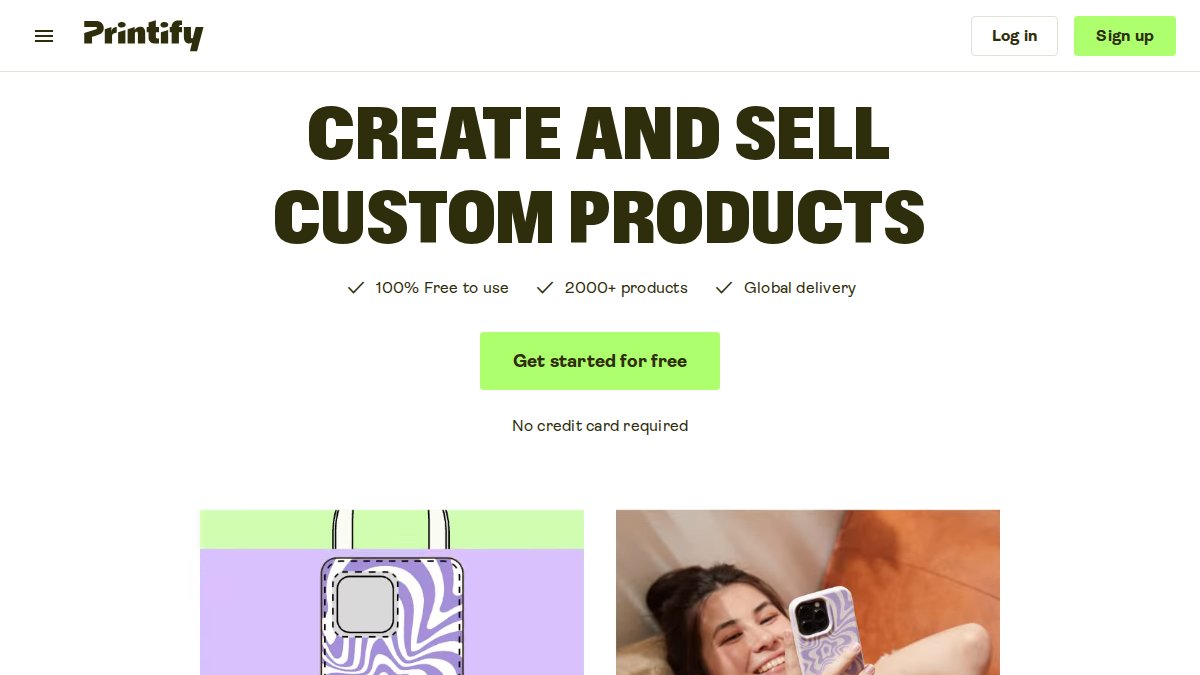
Printify connects merchants to a broad network of global print providers, which makes it the better choice when you want to compare costs across suppliers before committing. A mockup generator handles product visualization, real-time tracking covers production and shipping, and API access supports custom store development.
Frequently Asked Questions
What are the print-on-demand trends for 2026?
Print-on-demand in 2026 continues shifting toward localized production and sustainability. Platforms like Gelato now produce in over 30 countries to cut shipping times and carbon footprints. E-commerce integration with Shopify, Etsy, and WooCommerce is standard, and white-label packaging options let brands present a unified experience. API access and automated order routing are becoming baseline features, not premium add-ons. For businesses weighing print on demand vs commercial printing, the deciding factor remains volume: POD suits low-volume, high-variety needs, while commercial printing wins on bulk unit cost.
Is commercial printing a declining industry?
Commercial printing is not declining overall, but it is consolidating. Traditional offset work for newspapers and directories has shrunk, while demand for customized marketing collateral, branded merchandise, and packaging has grown. Businesses now order smaller, more frequent runs with faster turnaround times. The commercial printing industry trends 2026 show a shift toward digital printing, web-to-print storefronts, and automated workflows that reduce waste. Printers that offer both offset and digital capabilities, plus fulfillment services, are capturing more enterprise accounts than single-service shops.
What are the top commercial printing companies for small businesses?
For small businesses, the best commercial printing alternatives in 2026 depend on your product mix. Vistaprint works well for templates and signage on a tight budget. GotPrint offers competitive bulk pricing for standard marketing collateral. PrintingCenterUSA specializes in catalogs and booklets with free file review. 48HourPrint handles tight deadlines for flyers and postcards. If you need apparel alongside print, CustomCat provides fast production and bulk discounts. Each has trade-offs in customization depth, minimum order quantities, and shipping logistics, so match the platform to your most frequent order type.
How do I choose between offset printing and print-on-demand services?
Offset printing makes sense when you need thousands of identical pieces and want the lowest unit cost. Setup costs are higher, but per-unit pricing drops sharply at volume. Print-on-demand suits low-volume, high-variety orders, especially for e-commerce fulfillment where inventory risk matters. Printful and Printify handle automated order routing and white-label fulfillment. If your business needs consistent branded collateral across multiple locations, a hybrid approach works: offset for high-run items like brochures, POD for apparel and short-run promos. Compare total cost of ownership, not just sticker price.
What should businesses look for in a commercial printing partner in 2026?
Focus on five criteria: production capacity and scalability, quality control processes, turnaround time reliability, e-commerce integration options, and total cost of ownership. Ask for sample testing before committing to a large order. Verify color consistency guarantees, especially if you manage branded materials across multiple locations. Check whether the partner offers API access or web-to-print storefronts for automated ordering. Review return policies and customer support responsiveness. A partner with a broad production network can absorb rush orders and supply chain disruptions better than a single-facility shop.
The real challenge isn't finding a printer. It's finding one that holds up when five locations need consistent materials on the same deadline. American Printing Services, LLC was built for exactly that: a network of over 2,500 production facilities, more than 20 years of industry experience, and multiple vendor relationships that keep supply steady when a single plant can't. Consolidate your print spend with American Printing Services, LLC and get precision-crafted materials delivered on time.